The real cost of reactive repair isn’t just the visit – it’s everything around it. Integrated service strategies can keep it from spiralling.
For operations leaders, the pattern is familiar. A machine goes down, productivity stalls, revenue is threatened, and customers begin asking questions. What follows is an urgent service response that must move quickly, often before anyone fully understands what’s broken or why.
Break/fix service is expensive from the moment it begins—not just because it’s inefficient, but because it’s inherently reactive. Costs are incurred before context exists. Labor is dispatched before diagnostics are complete. Parts are mobilized without certainty. By the time a technician is on the way, downtime is already accumulating, and every decision that follows carries financial weight.
Too often, however, break/fix service is evaluated in isolation: a technician was dispatched, a problem was identified, and a repair was either completed or deferred. In reality, that single visit is rarely the end of the story. Data consistently shows that reactive service events are far more complex than they appear, and for many operators, the costs extend well beyond the initial incident that triggered concern.
When all is said and done, the most significant cost driver isn’t even the emergency dispatch—it’s the unprepared emergency dispatch. When a technician arrives without the right part, the right insight, or the right historical context, resolution slows and downstream costs multiply from repeat visits, parts shipping, and the administrative time wasted coordinating vendors, approvals, and next steps while customers absorb the impact of prolonged downtime and diminishing confidence.
What appears to be a single service call is, in fact, a fragmented workflow struggling to function like a system.
The Hidden Cost of an Unprepared Visit
Many organizations accept partial or failed service outcomes as unavoidable. The machine “just” needed to be cleaned. The technician “just” didn’t have the right part. The problem was “just” a minor error— discovered only after someone drove onsite.
Each of these scenarios carries real cost, even when it doesn’t show up clearly on an invoice. Additional dispatches, expedited shipping, idle equipment, and lost time erode margins and downtime stretches from hours into days. In context, break/fix becomes significantly more expensive—particularly when the visit could have been avoided altogether.
Why Break/Fix Fails at Scale
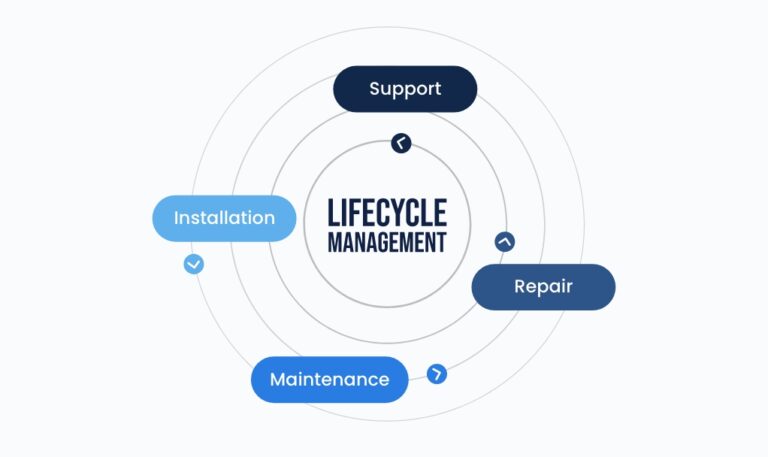
The issue isn’t reactive service itself; it’s reactive service operating without integration. When preventive maintenance exists outside the core service workflow, technicians lack insight into an asset’s condition and history. When parts management is handled separately, availability and timing become uncertain. When depot repair is disconnected, failed components exit the system slowly or not at all.
Under these conditions, break/fix turns into a gamble. Sometimes the resolution holds. Often it doesn’t. Over time, operators end up paying more for repeated “low cost” visits than they would for a service model designed to resolve issues the first time.
Changing the Outcome, Not Just the Response
The most effective way to control break/fix cost isn’t by pushing technicians to arrive faster or negotiating lower response rates. It’s by reducing how often reactive service is required—and ensuring that when it is required, the visit succeeds.
Preventive maintenance is the first lever. Assets that are routinely inspected, serviced, and corrected before failure generate fewer emergencies, fewer unknowns, and fewer urgent dispatches. But prevention alone doesn’t solve everything.
When failures do occur, preparedness determines the outcome. Technicians need access to the right parts at the right time. Inventory needs to be visible, positioned, and managed intelligently. Faulty components require a clear repair and return path that feeds back into available stock instead of disappearing into storage rooms or disposal streams.
This is where integrated parts management and depot repair fundamentally change break/fix economics. A service visit supported by inventory intelligence and closed loop component recovery isn’t simply faster—it’s far more likely to be final. First time fix rates improve not because technicians work harder, but because the system enables them to succeed.
Measuring What Actually Matters
Break/fix will always play a role in service operations. Equipment fails. Conditions change. No system eliminates disruption entirely.
But organizations that control service cost and uptime at scale design their operations to minimize reactive events and maximize the effectiveness of the systems meant to prevent them. They use preventive maintenance to reduce failure frequency, align parts strategy with service execution to improve first time fix rates, and rely on depot repair to recover value and eliminate waste.
They aren’t fighting breakdowns more aggressively. They’re designing service so breakdowns resolve predictably—within a coordinated system that treats service as a continuous flow, not a series of exceptions.
Break/fix isn’t breaking the bank because it happens. It’s expensive because it’s isolated from end-to-end service management. If you’re ready to move beyond fast fixes and start building service strategies that reduce disruption altogether, we can help.