How Repositioning Parts Inventory Increased First-Time Fix and Reduced Downtime for a National Cash Handling Provider.
A national provider of cash handling equipment—smart safes and related systems used by retailers and financial institutions—was facing a common problem. Their service model was strong and they had a great reputation for both excellent equipment and service. But in many regions, their first-time fix rate (FTF) wasn’t good enough and their service partner at the time did not have a viable path to resolution. That’s when they came to CPI.
At first glance, it would have been easy to assume the issue was execution: technician performance, training, or coverage. But when we took a closer look at the data, a different pattern emerged. The technicians didn’t lack knowledge or preparation. They lacked parts.
Performance was slipping due to parts availability.
In the existing model, parts were managed by the customer and shipped out as needed.
As a result, a typical service event looked like this:
A technician would arrive on-site, diagnose the issue correctly, and determine which component needed to be replaced. But if that part wasn’t already in hand, the job couldn’t be completed that day. That second visit wasn’t an exception; it was a standard part of the repair process.
We analyzed historical performance to identify the root cause and business impact.
When this customer came to us, the first thing we did was ask for their historical performance data. From that, we modeled service performance against parts availability and saw a direct, measurable relationship.
The pattern was clear:
- Failures were highly concentrated: A small number of parts drove a large share of repeat visits, downtime and service inefficiencies
- First-time fix was fundamentally an inventory issue: Every time a part was missing, a repeat visit was required. Every time the part was present, the likelihood of resolution increased exponentially
We found that over the course of a single year just one part caused 1,200 repeat visits and more than 30,000 hours of delay. Across all parts we analyzed, the total impact was more than 7,000 unnecessary repeat visits and 180,000+ hours wasted on delays.
Right away it was clear that without repositioning parts inventory, first-time fix performance was structurally capped – any call requiring a non-stocked component automatically required a second visit.
We found a better way.
From there, we followed the data and created a model to illustrate the impact of strategic parts management. We knew that having the right part in trunk stock would increase the likelihood of resolving the issue on the first visit. Accordingly, adding more SKUs to technician vehicles would improve the projected FTF rate.
But capital and space are finite, which created the real challenge: determining the best balance of managing costs and inventory – and making the most of the limited space in a technician’s trunk.
The Shift: Moving Parts Closer to the Point of Service
When we analyzed every part used in service and determined how often each one failed, we found that a small number of high-frequency parts was responsible for a disproportioned share of repeat visits and delays. By progressively adding those to technicians’ trucks, we could directly increase FTF rates, ultimately reaching more than 90% with a targeted set of inventory.
From there, we balanced performance with practicality by defining which parts should live on the truck, which could be staged locally, and which could remain centralized in our depot center. In short, we didn’t just recommend adding inventory – we engineered where it should sit to maximize service performance.
The customer agreed and we put our consigned inventory approach into action. Parts were still owned by them but managed and positioned by us.
High-frequency, high-impact parts were moved directly onto technician vehicles as standardized trunk stock. Lower-frequency parts were positioned in forward stocking locations (FSLs) for next-day access. A centralized home office inventory supported replenishment across the network.
This created a system where most service calls could be resolved immediately, and the remaining ones were handled with a controlled, predictable delay.
The Impact was Immediate
With standardized trunk stock in place, we projected that we could achieve a first-time fix rate of approximately 92%. And we achieved it in the field.
We were also able to optimize cost. By selectively moving lower-impact SKUs out of trunk stock and into forward stocking locations, the customer reduced inventory investment by approximately $189K, with only 5.2% impact to FTF. That gave them a clear lever to pull: they could decide how far to push performance versus how tightly to manage inventory cost. We gave them strategy in place of reactivity.
Intentional Decision Making led to Greater Confidence and Control
Not every part was moved onto technician vehicles, and that was intentional. There are always components that are too low-frequency or too specialized to justify carrying in the field. For those cases, the service model still required a second visit. But under the new model, those situations became the minority—not the norm.
By covering the most common failure points with trunk stock, the customer dramatically improved overall FTF without overloading technicians with unnecessary inventory. The system became more efficient because it was more targeted.
The model also made it possible to quantify what “best-in-class” would require. To push FTF to approximately 97%, the customer would need to invest an additional $428K in inventory. That clarity mattered. Instead of guessing how to improve performance, we could see exactly what it would cost—and decide whether the incremental gain justified the investment.
The Bottom Line
By shifting from a customer-managed, shipment-based model to a managed, consigned parts strategy, our customer fundamentally changed how their service operation performed.
First-time fix improved. Downtime decreased. Technicians stopped revisiting the same issues and started completing more calls per day. Shipping and logistics became simpler; inventory became purposeful instead of reactive and most importantly, the experience for end customers—retailers and financial institutions who rely on that equipment—became more consistent and predictable.
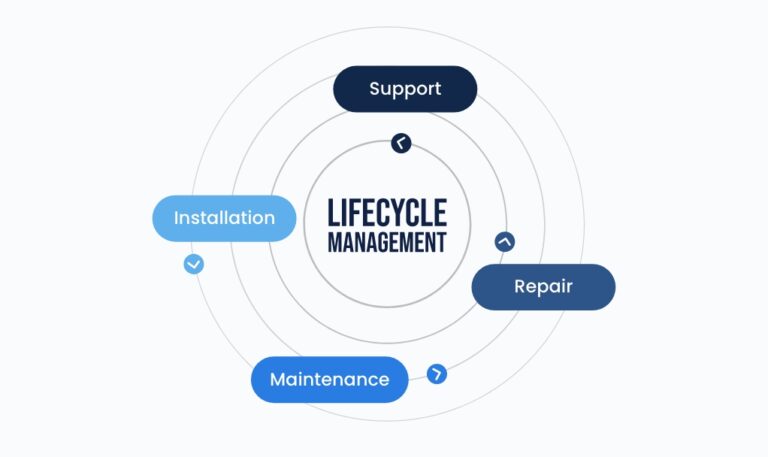
And it all came back to parts and partnership. In field service, especially when supporting complex cash-handling systems, that’s what determines whether a job gets finished the first time or not. Talk to our team of service pros about how an integrated service model – one the marries preventive maintenance, field repair, parts management and depot service – can improve your performance like it has for our 8,000 global service customers.