Is a fragmented service model costing you growth?
Seeking the lowest cost option may seem like the obvious choice. It may not be so obvious when every vendor cost, including the work that comes with juggling multiple partners, starts to add up. Many businesses seek out the lowest cost options for vendors, but that may not be the most optimal approach. When you compare it to a holistic service model, siloed vendors could cost you more than you realize.
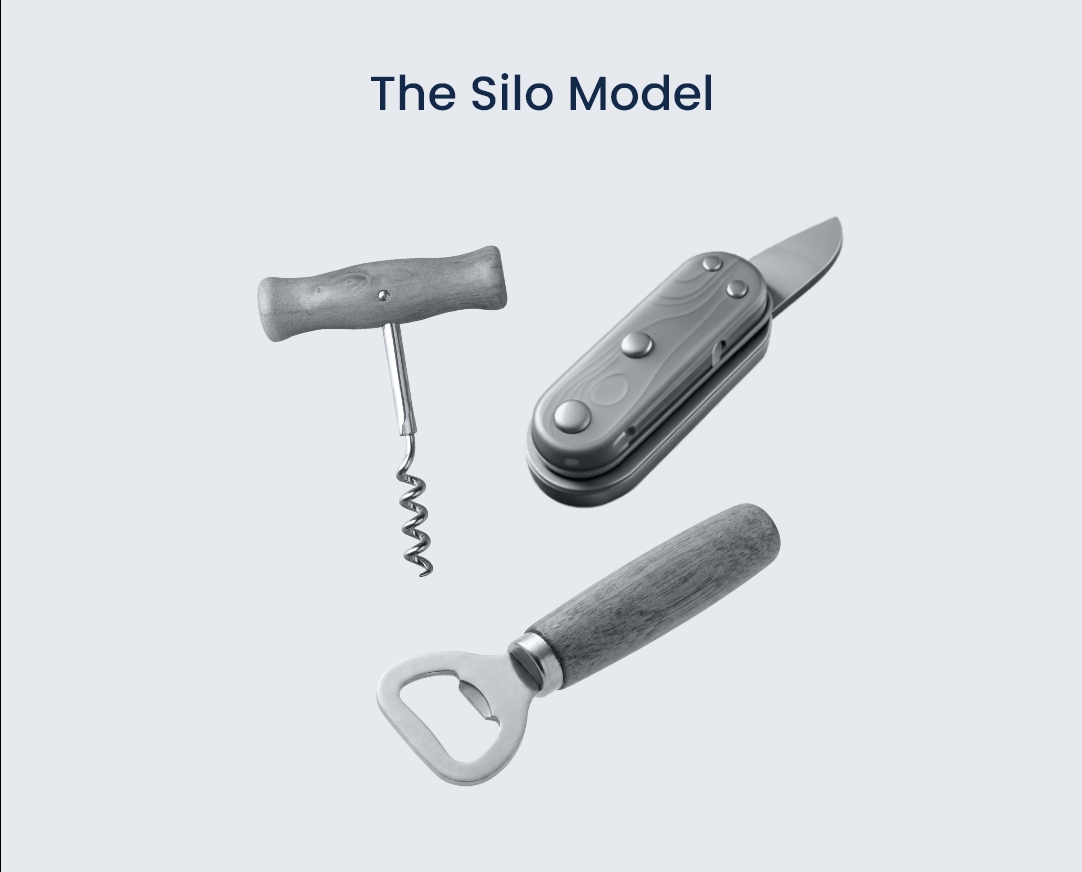
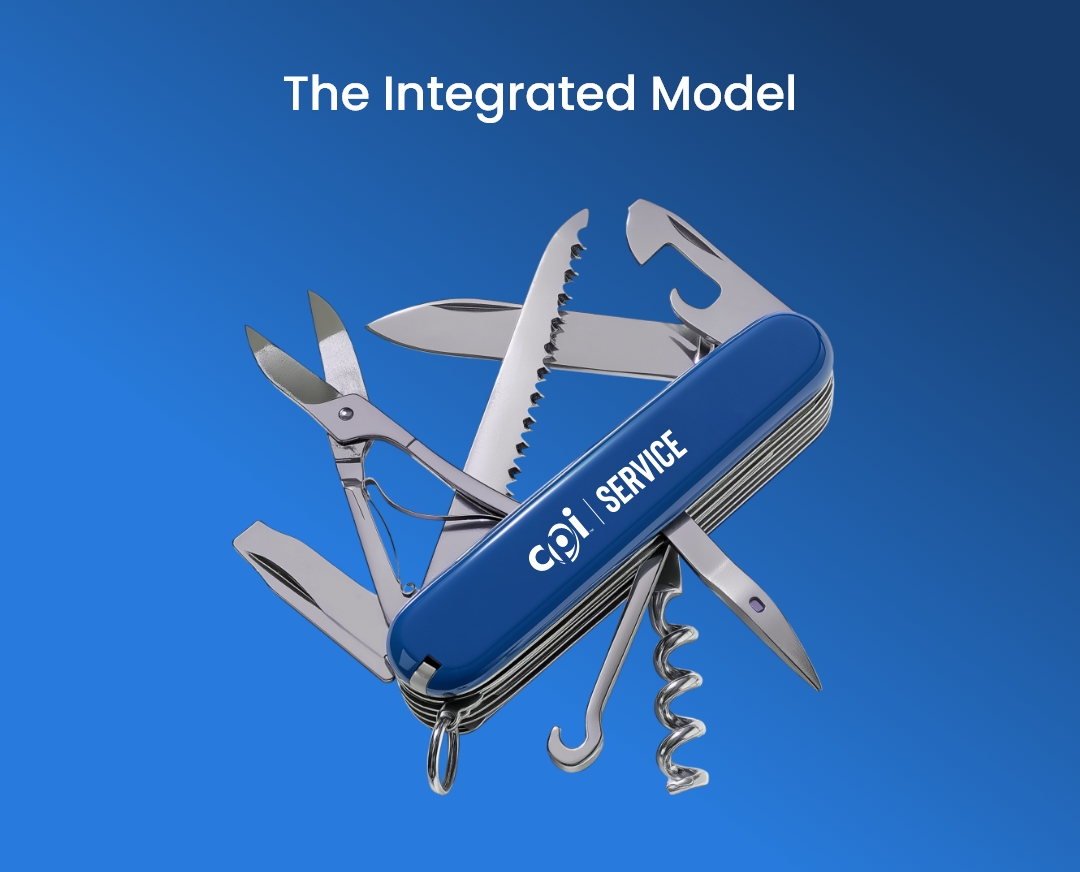
When goals, standards, and accountability are shared, service becomes reliable across the board. These are not just written KPIs. They are intrinsic values that are built into how the organization operates. Successful integrated models provide value not just in met SLAs; they include reliable, W2 technicians, proactive communication before, during, and after a service call, and onboarding focused on your business’s goals and standards.
Siloed vendors might seem like the best option. But the cost of lost accountability and staying in the dark on critical disruptions can compromise your business goals. If your service model is not fully aligned, it might be time to take a second look.
Read Our Service Evaluation Guide and Benchmark Scorecard

The sections that follow are not about replacing KPI performance as an evaluation tool, but about complementing them with questions that reveal how a service organization is designed, how it operates under stress, and whether it is built for partnership rather than transactions. KPIs are great at evaluating past performance and identifying gaps. But if you want to predict future outcomes, they’re unreliable at best.
If you’re evaluating a current provider—or choosing your next one—these foundations will tell you far more than any dashboard.
Operational Discipline and Heritage Matter More Than Most Realize
One of the clearest but least discussed hallmarks of a great service organization is where it comes from. Service operations rooted in environments that demand precision, repeatability, and failure tolerant design tend to carry those disciplines forward, even when supporting assets they did not originally manufacture.
Organizations with engineering heritage approach service differently. They are conditioned to think in failure modes, tolerances, and systems interactions rather than symptoms alone. That mindset translates into more effective diagnostics, more rigorous root cause analysis, and a bias toward preventing problems rather than cycling through them.
This matters because complex electromechanical systems do not fail politely. They degrade across multiple variables at once, often under high volume, high stakes conditions. Service organizations that are comfortable inside that complexity tend to design operating models, training programs, and escalation paths that assume things will go wrong—and are prepared when they do.
People, Training, and Structure Are Not “Soft” Advantages
Great service organizations invest disproportionately in the elements that are hardest to change later: workforce model, training rigor, and governance. That usually means employing technicians directly rather than relying on loosely controlled third party networks, not because contractors are incapable, but because consistency is impossible without shared standards, incentives, and accountability.
Training follows the same logic. Highperforming service organizations do not rely on generic certifications or theoretical coursework; they train against real equipment in realistic service scenarios, with clear expectations aligned to customer environments. Over time, this creates institutional expertise rather than isolated pockets of experience.
The effect is subtle but powerful. When service outcomes depend less on who happens to respond and more on how the organization operates, reliability becomes repeatable rather than aspirational.
Communication Is a Core Operating Capability
Another hallmark rarely captured in dashboards is how a service organization communicates when things are ambiguous, delayed, or evolving. Transactional providers tend to communicate reactively—when asked, when escalated, or when contractually required. Partnership oriented organizations communicate proactively, often more than feels strictly necessary.
That usually means picking up the phone instead of waiting for automated updates, explaining what is known and what is not, and documenting actions in ways that align with how customers operate internally. Overcommunication is not inefficiency; it is a risk management discipline that reduces surprise and accelerates decision making on both sides.
For operators managing uptime across locations, vendors, and internal stakeholders, this clarity often matters as much as speed.
Fit Is Engineered Through Onboarding, Not Discovered Later
Finally, great service organizations are deliberate about how they begin. They recognize that mismatched expectations around communication style, documentation standards, escalation protocols, and system integration create friction long after go live.
Strong providers invest in structured onboarding that aligns workflows, reporting expectations, systems interfaces, and behavioral norms upfront. Notes are written the way customers expect to read them. Data flows into the systems customers actually use. Ownership is explicit before the first ticket is opened.
This investment rarely shows up in performance metrics immediately—but its absence shows up everywhere when service volume increases.
A Practical Way to Evaluate Service Beyond the Dashboard
If you want to understand whether a service organization is transactional or built for partnership, these questions reveal more than KPI reports:
- How is your service organization designed to perform when complexity increases—not just when volumes rise?
- This question probes whether performance resilience has been engineered or whether success depends on favorable conditions.
- Which parts of your service operation are standardized, and which are intentionally customized to customer environments?
- Strong answers reveal discipline and flexibility—clear standards paired with thoughtful adaptation.
- How do insights from service events (failures, escalations, repeat issues) feed back into training, process design, or preventive strategy?
- This distinguishes organizations that learn systematically from those that simply reset and move on.
- Where does accountability for uptime ultimately live when responsibilities overlap across teams or functions?
- Clear ownership is a strong indicator of maturity; vague answers usually indicate fragmentation.
- Describe a situation where an issue could not be resolved quickly and required disciplined root‑cause analysis. How did your team approach it?
- Strong responses demonstrate patience, structure, and engineering thinking rather than escalation fatigue or workaround culture.
- Tell us about a time communication—rather than technical skill—made the difference in maintaining trust during a service disruption.
- This is where over‑communication, transparency, and partnership behaviors become evident.
- Walk us through how you onboard a new customer from a service perspective. What specifically gets aligned before the first call is ever opened?
- Mature organizations describe structured, owned onboarding; transactional ones tend to gloss over this phase.
- How do you adapt your service behaviors—documentation, escalation, communication cadence—to fit how a customer operates internally?
- The answer should reflect listening, customization, and systems integration—not “best practices” applied indiscriminately.
Strong service organizations respond with specificity, structure, and process ownership. They are comfortable discussing where they’ve struggled, what they’ve learned, and how their operating model has evolved as a result.
Weak ones rely on reassurance, metrics alone, or promises that accountability will surface later.
Great service is not defined by how quickly someone shows up. It is defined by how consistently outcomes hold under pressure—and that is something that must be built long before the call comes in.
Want more answers to critical service questions? Sign up below to hear how an experienced service organization handles situations like these.
Sign up for more insights that help optimize Service
"*" indicates required fields